The theme of the 17th Congress of the International Society for Eighteenth-Century Studies (ISECS) is “Enlightenment and (In)equality”.
Throughout the eighteenth century, technological change, the development of trade and the globalization of markets brought about extremely profound changes with an international dimension in social structures of the countries. Yet in the same period, the intellectual developments associated with the Enlightenment caused Reason to collide with inequality, and to confront or at least discuss this, rather than accepting it as a given, natural and inevitable phenomenon. The desire to understand the nature of inequality thus became an aspiration that permeated all the academic disciplines that blossomed from the Enlightenment tree and also madea very deep mark on literary and visual culture and representations of all kinds. The equality proclaimed by the members of the Enlightenment during the eighteenth century could be defined in legal terms as well as in terms of wealth, status, gender, origin, race, caste, education or religious affiliation. It also extended beyond the individual sphere to colonial societies and underdeveloped nations, and Spain, with its vast empire, is a case in point. Fostered by the circulation of ideas and cultural and artistic currents, the desire for equality drove much of the reform of economic, political and legal institutions undertaken by Enlightenment thinkers in their respective countries. But was the concept of equality as coined in the “early” and “late” Enlightenment similar? Was equality used analogously by “radicals” and “moderates”? In a spatial sense, was the equality between rich and poor countries and metropolises and colonies the same? In short, is it appropriate to speak of a single concept of equality in the “long” eighteenth century? The theme of the Zaragoza-2027 Congress thus addresses some of the major overlapping concerns of current research into the Enlightenment, adopting a multidisciplinary and international approach to the various notions of equality that emerged in the eighteenth century. Our theme will likewise encourage the building of bridges between the eighteenth and twenty-first centuries by putting forward a set of interpretative keys to aid our understanding of the daunting challenges facing the modern world.
The Congress Programme includes plenary sessions, panels, dialogues, thematic sessions and roundtables, as well as poster presentations. The Congress will be held in three languages: English, French and Spanish.
With the main theme as a focus, the Scientific Committee has scheduled four plenary sessions, two dialogues between two academics on the theme of Inequality in the Age of Enlightenment: Lessons for the Present? (I and II) and a panel on The Inequalities of the Enlightenment. A second panel addresses the theme of The Past and Future of ISECS and includes the presentation of a book on the history of the ISECS to commemorate the institution’s sixtieth anniversary.
We invite participants to propose thematic sessions, roundtables and individual presentations on the main theme or any other aspect related to the “long” eighteenth century (1670-1830). Early career scholars are also invited to submit posters (one per participant) on research currently in progress or that they would like to undertake in the future. The posters will be on display during the Congress.
The Congress features two other specific programmes, which have their own space in the General Programme. The first is for thematic sessions, roundtables, individual presentations and posters focusing on the use of Digital Humanities(DH). The second, Growing as a Scientific Community(GSC), invites participants to organise thematic sessions and roundtables that contribute to revitalising ISECS’ internal life and the future of international and multidisciplinary research on the eighteenth century.
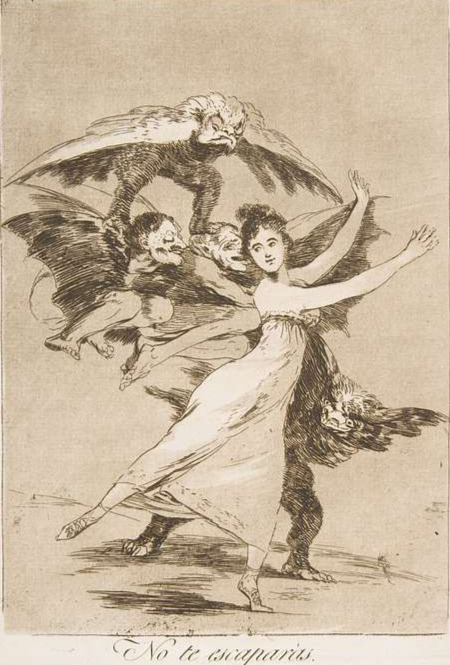
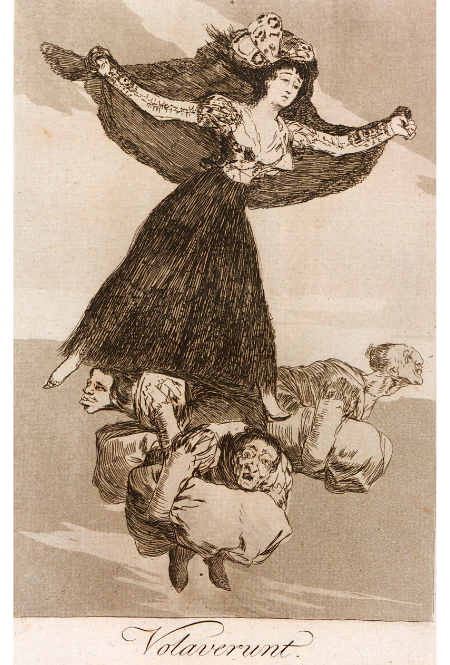
The Congress hosts the ¡Viva Goya!culture programme devoted to this world-renowned Aragonese painter, the bicentenary of whose death is in 2028. The programme includes film screenings, museum exhibitions, guided tours and performances of music and dance in Goya’s time. It closes with an informal gathering I, Yo, J´💙 Les Lumières, accompanied by music, dance and conversation.
Social events include a welcome cocktail party andGala Dinner.
The General Programme will be drawn up on the basis of the contributions submitted by those who are interested in taking part. Participants are welcome to propose one thematic session and take part in roundtables, but may only submit a maximum of two contributions, one for the General or Digital Humanities Programme and another for the Growing as a Scientific Community Programme. The General Programme detailing the schedule of sessions for each day of the Congress will be published as early as possible in spring 2027.
All participants must register and pay the registration fee online. Please be aware that these are mandatory requirements if your contribution is to be included in the final programme and presented. It is not possible to register without using the online application form or in person during the Congress itself.
Registration for all participants making contributions (thematic sessions, roundtables, individual presentations and posters) closes on 15 May 2027; the closing date for other participants is 15 June 2027.
For organisational reasons, participants are kindly requested to register as soon as possible in order to benefit from reduced registration fees, the deadline for which is 28 February 2027.