The Spanish Society for Eighteenth-Century Studies and the University of Zaragoza are delighted to welcome you to the 17th International Society for Eighteenth-Century Studies (ISECS) Congress.
This is the largest and most ambitious scholarly gathering to focus on the study of all academic disciplines of the eighteenth century.
The Congress will be held in Zaragoza (Spain) from Monday 12 July to Friday 16 July 2027. The organisers are ISECS, the Spanish Society for Eighteenth-Century Studies and the University of Zaragoza.
The Congress is open to contributions of all the subjects on the “long” eighteenth century. Its main theme is “Enlightenment and (In)equality”, an issue that permeated all academic disciplines of the period and also left a deep mark on the world of literary and iconographic representation and expression.
For five days the Congress offers an unparalleled setting for personal and academic encounters between scholars of the eighteenth century from all over the world, the exchange of research, experiences and scientific projects, and the sharing of knowledge.
Zaragoza is one of Spain’s major cities and has a rich historical, artistic and museum heritage. It also offers visitors a wide range of academic and cultural activities, including highly regarded local cuisine.
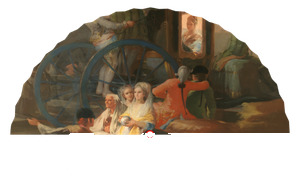
The city also offers visitors a great opportunity to explore Francisco de Goya’s paintings, works of great aesthetic value and a strong moral sense, with the artist himself providing the focus for the Congress’s cultural activities.
It will be an enormous pleasure to welcome you to Zaragoza in July 2027!
Fernando Durán, President of the Spanish Society for Eighteenth-Century Studies
Jesús Astigarraga, President of the 17º ISECS/SIEDS Zaragoza-2027 Congress.
Sociedad Española de Estudios del Siglo XVIII
@Sociedad Española de Estudios del Siglo XVIII
Design developed by NaturalDe Marketing 2026 | All rights reserved | Privacy and cancellation policy
Katia Fach Gómez is Associate Professor (accredited to Full Professor) at the University of Zaragoza (Spain). She holds a PhD in Law (European doctorate in German) and an LL.M. from Fordham University (New York, USA), where she received the Edward J. Hawk Award for Legal Excellence and graduated summa cum laude. Her research focuses on international litigation, alternative dispute resolution mechanisms, and cultural heritage. In the latter field, she is co-author of Arte secuestrado (Planeta, 2026), which examines, from the perspective of the Enlightenment onwards, the problem of the non-restitution of cultural objects by so-called ‘universal museums’. She is the author of numerous legal books, book chapters and academic articles published in English, Spanish and German by publishers including Oxford University Press, Springer, Kluwer, Brill, Edward Elgar, Routledge, Aranzadi, Tirant lo Blanch and Colex. She has served as a Seconded National Expert at the European Research Council (ERC) of the European Union in Brussels and as Area Director of the International Campus of Excellence Iberus at the University of Zaragoza.
Katia Fach Gómez es Profesora Titular (acreditada a Catedrática) de la Universidad de Zaragoza (España). Es Doctora en Derecho (doctorado europeo en idioma alemán) y ha cursado un Máster jurídico en la Universidad de Fordham (Nueva York-USA). En dicho máster obtuvo el premio jurídico Edward J. Hawk y la calificación summa cum laude. Su investigación se centra en litigación internacional, mecanismos alternativos de resolución de conflictos y patrimonio cultural. En este último ámbito es coautora del libro “Arte secuestrado” (editorial Planeta, 2026), en el que se analiza desde la etapa de la Ilustración el problema de la no restitución de obras de arte por parte de los “museos universales”. Es autora de múltiples libros jurídicos, capítulos de libros y artículos académicos publicados en inglés, español y alemán por editoriales como Oxford University Press, Springer, Kluwer, Brill, Edward Elgar, Routledge, Aranzadi, Tirant lo Blanch y Colex. Ha trabajado como experta nacional (Seconded National Expert) en el Consejo Europeo de Investigación (European Research Council – ERC) de la Unión Europea en Bruselas y ha sido Directora de Área del Campus de Excelencia Internacional Iberus de la Universidad de Zaragoza.
Fernando Durán López holds a PhD in Hispanic Philology and is Professor of Spanish Literature and a member of the Eighteenth-Century Studies Research Group at the University of Cádiz, where he has taught since 1997. His research is focused on Spanish autobiography; political literature, journalism, exile and intellectual life in and around the Cortes of Cádiz; eighteenth-century literary astrological almanacs; and government censorship of books during the same period. He has served as President of the Spanish Society for Eighteenth-Century Studies since 2022 and is co-editor-in-chief of the journal Cuadernos de Ilustración y Romanticismo. He is the author or editor of around fifty books, including José María Blanco White o la conciencia errante (2005); Vidas de sabios. El nacimiento de la autobiografía moderna en España (1733–1848) (2005); Versiones de un exilio. Los traductores españoles de la Casa Ackermann (Londres, 1823–1830) (2015); Juicio y chirinola de los astros. Panorama literario de los almanaques y pronósticos astrológicos españoles, 1700–1767 (2015); De las seriedades de Urania a las zumbas de Talía. Astrología frente a entretenimiento en la censura de los almanaques de la primera mitad del XVIII (2021); and Cándido María Trigueros, censor (2025, co-authored with C. Martínez Torres).
Fernando Durán López es doctor en Filología Hispánica, catedrático de Literatura Española y miembro del Grupo de Estudios del Siglo XVIII de la Universidad de Cádiz, en la que enseña desde 1997. Sus investigaciones se han centrado en la autobiografía española; en literatura política, periodismo, exilio y vida intelectual alrededor de las Cortes de Cádiz; almanaques astrológicos literarios del XVIII; y censura gubernativa de libros en el mismo siglo. Es presidente de la Sociedad Española de Estudios del Siglo XVIII desde 2022 y codirector de la revista Cuadernos de Ilustración y Romanticismo. Es autor o editor de una cincuentena de libros, entre ellos: José María Blanco White o la conciencia errante (2005); Vidas de sabios. El nacimiento de la autobiografía moderna en España (1733-1848) (2005); Versiones de un exilio. Los traductores españoles de la Casa Ackermann (Londres, 1823-1830) (2015); Juicio y chirinola de los astros. Panorama literario de los almanaques y pronósticos astrológicos españoles, 1700-1767 (2015); De las seriedades de Urania a las zumbas de Talía. Astrología frente a entretenimiento en la censura de los almanaques de la primera mitad del XVIII (2021); Cándido María Trigueros, censor (2025, con C. Martínez Torres).
Javier Usoz is Associate Professor at the University of Zaragoza (Spain). He holds a degree in Law and a PhD in Economics. His research focuses on the history of economic thought, the international circulation of economic ideas during the Spanish and European Enlightenments, and the relationship between economic, political and social ideas. He has co-edited, among other works, L’Économie politique et la sphère publique dans les débats des Lumières (Casa de Velázquez, 2013), Bajo el velo del bien público (Institución Fernando el Católico, 2020), Voces económicas de la ‘Enciclopedia Moderna’ de José Joaquín de Mora (Instituto de Estudios Fiscales, 2022), and the economic works of Tomás de Anzano (Institución Fernando el Católico, 2023). He has published in leading journals in his field, including History of Political Economy, History of Economic Ideas, Revista de Historia Económica, Revista de Estudios Políticos, and Historia Agraria.
Javier Usoz es Profesor Titular en la Universidad de Zaragoza (España). Es Licenciado en Derecho y Doctor en Economía. Su investigación se centra en la Historia del pensamiento económico, la circulación internacional de las ideas económicas de la Ilustración española y europea, y la relación entre las ideas económicas, políticas y sociales. Es coeditor de libros como L´Économie politique et la sphère publique dans les débats des Lumières (Casa de Velázquez, 2013), Bajo el velo del bien público (Institución Fernando el Católico, 2020), Voces económicas de la ‘Enciclopedia Moderna’ de José Joaquín de Mora (Instituto de Estudios Fiscales, 2022) y la obra económica de Tomás de Anzano (Instituto Fernando el Católico, 2023). Ha publicado en las mejores revistas de su especialidad, entre otras, History of Political Economy, History of Economic Ideas, Revista de Historia Económica, Revista de Estudios Políticos e Historia Agraria.
Jesús Astigarraga is Professor of Economics at the University of Zaragoza (Spain). He holds a PhD in Economics and a PhD in History. His research focuses primarily on intellectual history, the history of economic thought, the international circulation of ideas, the institutionalisation of political economy, and the Spanish Enlightenment. He is the current Vicepresident of the Spanish Society for Eighteenth-Century Studies Among his most recent books as author/co-author or editor/co-editor are: A Unifying Enlightenment. Institutions of Political Economy in Eighteenth-Century Spain, 1700–1808 (Brill, 2021); Adam Smith and the ‘Wealth of Nations’ in Spain. A History of Reception, Dissemination, Adaptation and Application, 1777–1840 (Routledge, 2022); The Economic Legacy of José Joaquín de Mora. Spreading Classical Political Economy in the Hispanic World (Palgrave Macmillan, 2024); Gerónimo de Uztáriz and his Economic Work. New Politics and the Origins of the Science of Commerce in 18th Century Europe (Palgrave Macmillan, 2025); and A History of Spanish Economic Thought: From Scholasticism to Keynesianism (Routledge, 2026).
Jesús Astigarraga es Catedrático de Economía en la Universidad de Zaragoza (España). Es Doctor en Economía y Doctor en Historia. Su labor investigadora se centra habitualmente en ámbitos como la historia intelectual, la historia del pensamiento económico, la circulación internacional de las ideas, la institucionalización de la economía política y la Ilustración española. Es el actual vicepresidente de la Sociedad Española de Estudios del Siglo XVIII. Algunos de sus últimos libros como autor/coautor o editor/coeditor son: A Unifying Enlightenment. Institutions of Political Economy in Eighteenth-Century Spain, 1700-1808 (Brill, 2021); Adam Smith and the ‘Wealth of Nations’ in Spain. A History of Reception, Dissemination, Adaptation and Application, 1777-1840 (Routledge, 2022); The Economic Legacy of José Joaquín de Mora. Spreading Classical Political Economy in the Hispanic World (Palgrave MacMillan, 2024); Gerónimo de Uztáriz and his Economic Work. New Politics and the Origins of the Science of Commerce in 18th Century Europe (Palgrave MacMillan, 2025); A History of Spanish Economic Thought: From Scholasticism to Keynesianism (Routledge, 2026).